Higher Education Support Programme

Repository logo

2024–
Project leader

This programme was launched in 2024 to address challenges highlighted in the 2023 National Language Resources Audit report:

Van Dyk, T., Wilken, I., Ravyse, N., Du Plessis, D., Khumalo, L. & Steyn, J. 2023. National Language Resources Audit. Potchefstroom: SADiLaR. https://hdl.handle.net/20.500.12185/667

Eight key areas for the implementation of the Language Policy Framework for Public Higher Education Institutions were identified by me and five co-authors:

  • Language planning and management
  • Policy monitoring and reporting
  • Multilingual pedagogy training
  • Academic language development
  • Terminology development
  • Collaboration and shared funding
  • English dominance in academia
  • Staff conversational language ability

As project leader, these are my present priorities. Multilingualism remains a key focus. Multilingualism in higher education is not just a matter of policy, but a critical enabler of social and academic inclusion.

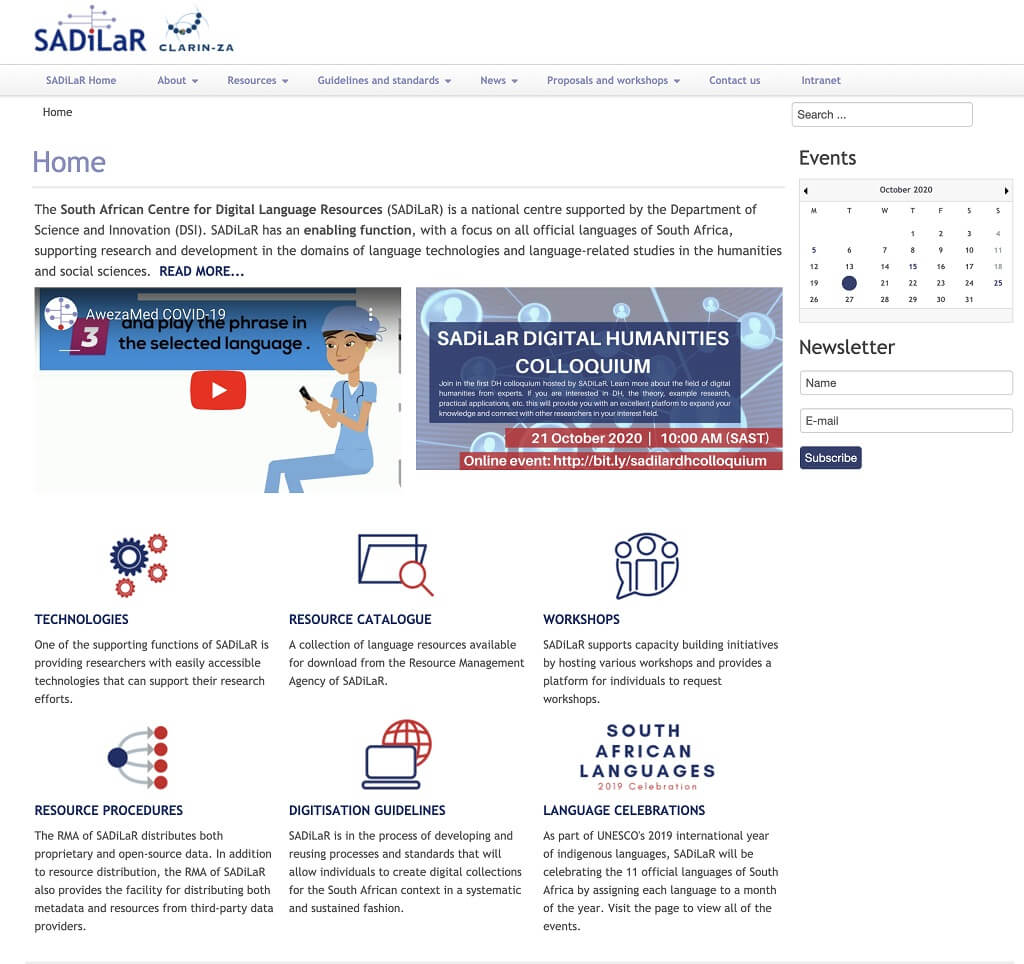
Read more about the project on the SADiLaR website: SADiLaR launches Higher Education Support Programme to advance multilingualism in South Africa’s universities.

Academic writing support for postgraduate students

UCDG – University Capacity Development Grant (2021–current)

– Project leader, content designer and content developer


Academic acculturation refers to the ability (and motivation) to assimilate, understand, embrace, interact and engage with academic discourse in all its diversity. This is an essential condition for academic integration, and it is often difficult to accomplish. It therefore entails growing to become a member of the academic community by becoming aware of how to use (and indeed conform to) the academic community’s communicative currency: norms and practices, values and expectations and linguistic conventions that constitute academic discourse. The success of academic acculturation, in essence, lies within students’ ability to express themselves appropriately and adequately through academic writing. Academic writing ability, among others, includes acquiring complex terminology (general and discipline-specific), scientific rhetoric, knowledge of technical structures in terms of academic argumentation, metacognition strategies, critical thinking skills, and academic integrity, all of which are of particular importance at postgraduate level. The purpose with this UCDG-project is to:

  • provide opportunities for the enhancement of academic writing development of postgraduate students at North-West University;
  • create practical and relevant academic writing support resources to empower students, lecturers and supervisors across campuses, faculties and different year levels; and
  • offer the prospect of tailor-made/entity-specific academic writing development opportunities in a combination of synchronous and asynchronous offerings.

A complete workshop series with educational videos, readers, exercises and summary sheets has been developed. The instructional design allows for it to be used as a complete stand alone, or different thematically focused modules in contact, online or hybrid modes.

Fair and diagnostic language testing

Repository logo

2017–current
Project leader

This project, within the SADiLaR ICELDA node, is aimed at providing fair and diagnostic language tests for academic purposes in the South African context. It includes two PhD studies under my supervision and the redesign of current academic literacy tests used for placement purposes. Apart from successful completion of the aforementioned studies, the project will also contribute to test data being available on a national platform for future use by other researchers.  Tests for use at secondary and higher education levels are available in six of the South African official languages, i.e. also contributing towards the advancing multilingualism. 

Learner corpus of academic writing

2017–current
Project leader

This project, within the SADiLaR ICELDA node, is aimed at collecting samples of academic writing of undergraduate students from all fields of study in at least two of the official languages of South Africa. The data will be used to inform the refinement of an online writing tool that can be used to the benefit of students across South Africa, e.g. in writing support courses.  As part of this project a complete tag set of typical errors that students make has been developed.

Multilingualism challenge

2019–current
Project leader and content design

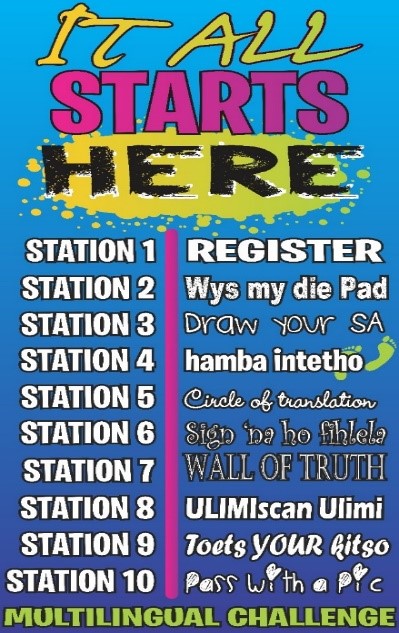
In support of the multilingual pedagogies approach adopted by the North-West University in order to successfully implement the their Language Policy and Plans, I took co-responsibility for the design of a multilingual challenge for current and prospective students to be exposed to a multilingual environment in a fun-filled manner. 

NWU Multilingualism challenge

Multilingual Academic Wordlist

2019-current
Project leader

In many cases students may find it difficult and take longer to understand information that is not written in their home language. The aim of this project within the SADiLaR ICELDA node, is to create and deliver academic wordlists that will serve as a resource to students to assist them to better understand words used within the information they gather to complete their assignments and as a result enhance their academic career. The word lists are based on the Open Educational Resource Term Bank (OERTB), but have been expanded extensively. 

Referella

Date: 2019–current
Role: Project leader and content developer

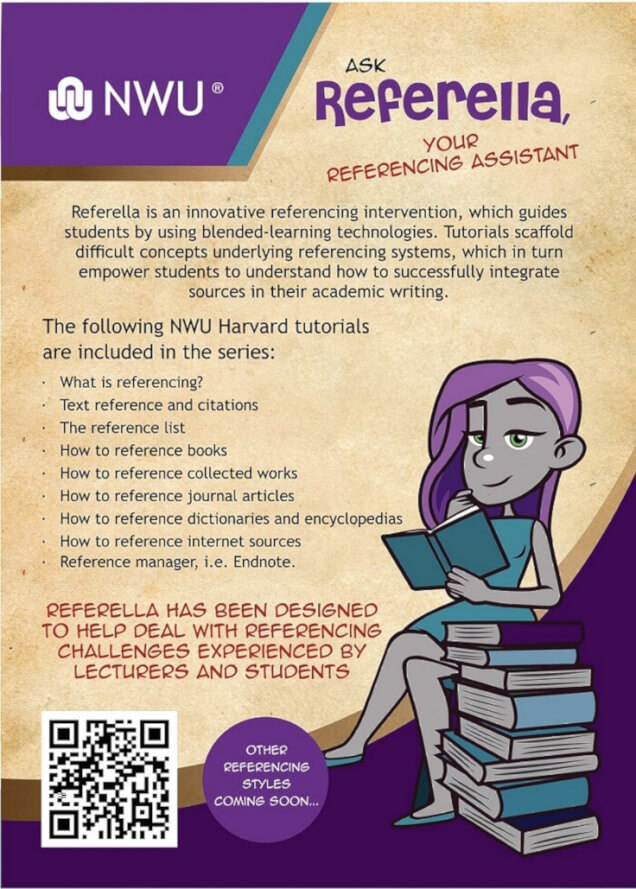
This project is aimed at affording students the opportunity to develop their referencing skills in four different referencing styles. It allows guidance with, and ample opportunity for, practicing referencing in a self-directed and autonomous manner. This project is a collaborative effort between the NWU’s School of Languages and the NWU Libraries, see: https://library.nwu.ac.za/referella.

It is designed in a multimodal fashion and could be used as a so-called stand alone or as part of a blend in a modular fashion.

Referella-your referencing assistant

Write it

Date: 2019–current
Role: Project leader

This project is aimed at affording students support with academic writing development in a multimodal fashion. Educational videos (in all official South African languages, as well as sign language), worksheets and exercises on different levels (i.e. scaffolded) are available on seventeen topics associated with academic writing. This product can be used as a so-called stand alone or as part of a blend.

Academic writing support

Date: 2017–current
Role: Project leader in South Africa

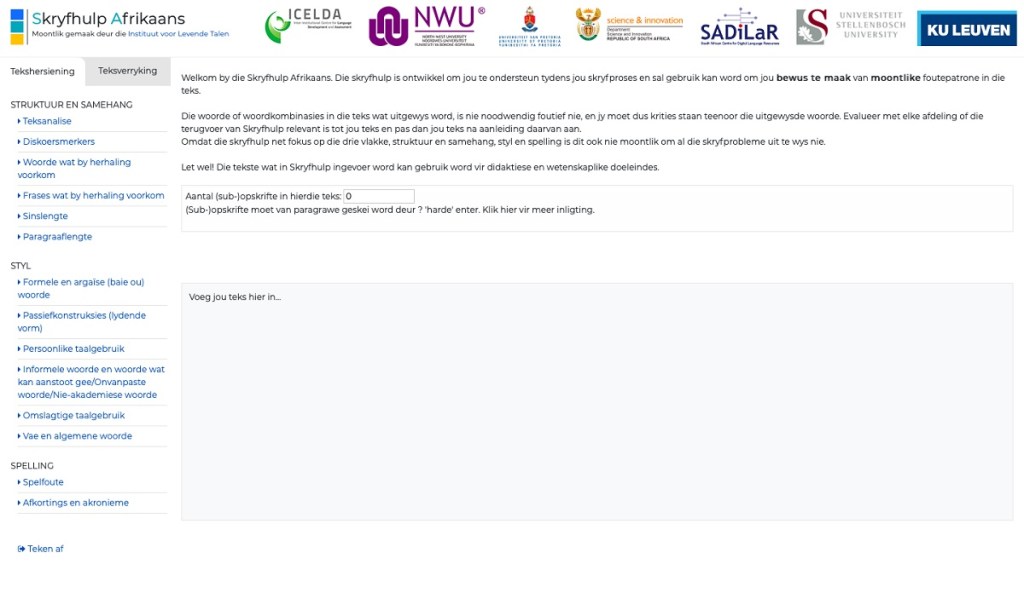
The “Schrijfhulp Portaal“, initiated by the Katholiek Universiteit Leuven (KU-Leuven) is aimed at affording students the opportunity to get online support with academic writing. Four South African partners are also involved, see:  https://saf.schrijfhulp.be. The main purpose of the project is to design, implement and refine an online writing tool in both Afrikaans (Skryfhulp Afrikaans) and English (Academic Writing Assistant), and if funding is secured, also in two African languages.

WIRED

Writing, Information literacy, Reading (WIRED)

Date: 2016-current
Role: Project leader

This project is aimed at the development of a complete academic literacy course offered online for open and distance learning (ODL) students, or in a blended fashion for residential students. The project is currently in a pilot phase. The final implementation date is scheduled for February 2021. To learn more about this exciting project, watch the introductory video or download a poster presentation: WIRED poster.https://www.youtube.com/watch?v=w4c9yKmmdVE